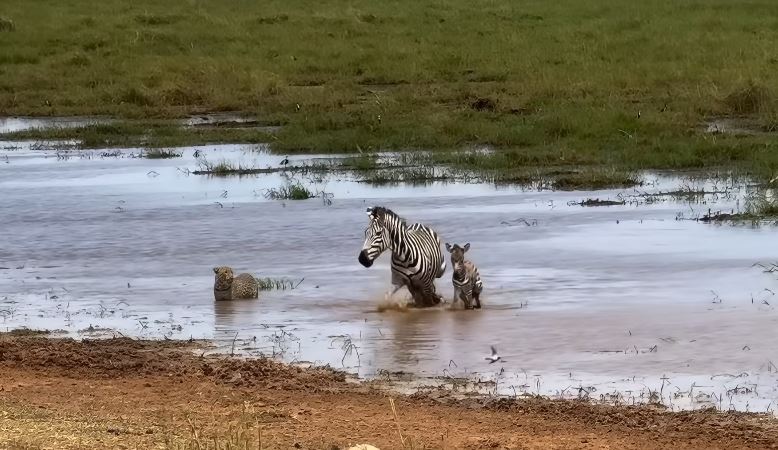
Leopards are exceptionally cunning predators whose survival rests on a remarkable combination of stealth, intelligence, and adaptability. As one of the most versatile big cats, the leopard has developed a hunting style that emphasizes silence and precise timing rather than sheer speed or strength. Its dappled coat provides nearly perfect camouflage in a wide variety of habitats—from dense forests and rocky highlands to savannas and semi-desert regions—allowing it to blend seamlessly into shadows and foliage. This natural concealment is the foundation of the leopard’s ambush strategy, enabling it to approach prey with near-invisibility until the final explosive moment of attack.
A key element of the leopard’s success is patience. Rather than chasing prey across long distances, leopards observe, wait, and strike only when the odds tilt in their favor. Their intelligence is evident in the way they select stalking routes, use terrain for cover, and identify the right moment to launch an attack. This opportunistic mindset allows them to exploit a variety of food sources, from antelope and wild pigs to birds, reptiles, and even smaller mammals when necessary. Their broad diet is one of the reasons they thrive in such diverse environments.
Another hallmark behavior is the leopard’s habit of storing kills in trees. This adaptation is both strategic and necessary. By hauling prey high into the branches—sometimes animals even heavier than themselves—they protect their hard-earned meals from scavengers like hyenas, lions, and wild dogs. This tree-hoisting technique demonstrates not only strength but also foresight, keeping food safe for multiple feedings.
Overall, the leopard’s blend of stealth, adaptability, and calculated intelligence makes it one of the most masterful hunters in the animal kingdom. It is a creature shaped by patience and resourcefulness, thriving wherever it can find cover, prey, and the opportunity to strike from the shadows.