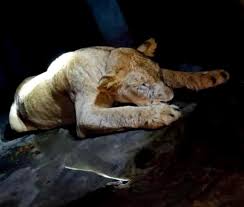
A female lion named Deiji stepped out of her cage at the Mirpur Zoo, but what emerged was not the image of a proud queen of the plains. Instead, the sight was heartbreaking. Her once-majestic frame looked frail and unsteady, as though her strength had been chipped away piece by piece. Each movement seemed slow and deliberate, not with the grace of a predator, but with the exhaustion of an animal that has endured far more than she ever should have. Her ribs were visible beneath her thin coat, and her face carried the weary expression of a creature that has been neglected for far too long.
A lion is meant to embody power and dignity. Yet Deiji showed none of that. What she revealed instead were the unmistakable signs of sickness and prolonged neglect. She appeared not like an animal raised under human care, but like one that had survived a famine or a harsh drought in the wild. The tragedy, of course, is that she was neither wandering the plains nor hunting to survive. She was living in a zoo—an institution supposedly designed to protect and care for animals that cannot fend for themselves.
If a zoo cannot provide proper food, medical treatment, enrichment, and dignity, then keeping wild animals behind bars becomes an act of cruelty rather than conservation. These creatures do not belong in cages merely to exist in misery. Their purpose is not to serve as spectacles for visitors while enduring discomfort and suffering behind the scenes.
Deiji does not look like a lioness who has aged peacefully. She looks like a victim of poor care, a living reminder of the consequences of neglect. Seeing her in such a condition is painful for anyone who understands what a lion is meant to be—strong, respected, and free.