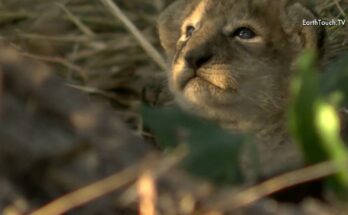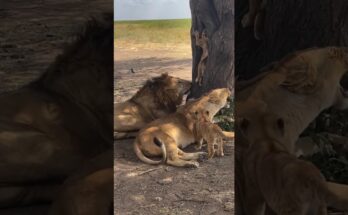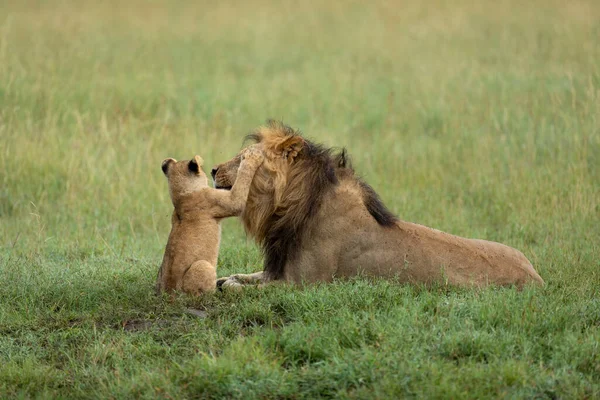
In the heart of Serengeti National Park, where the golden grasses ripple beneath the East African sun, a father lion stands watch over his young cubs. Though lionesses traditionally shoulder most of the responsibility for nurturing and raising the pride’s offspring, moments like these—when a dominant male interacts gently with his cubs—are rare, intimate glimpses into the complexity of lion family life.
The father lion, powerful and regal, exudes an unmistakable aura of authority. His thick mane catches the wind as he surveys the vast savanna, ensuring no intruder threatens his lineage. Yet when he turns toward the cubs tumbling playfully at his feet, his demeanor shifts. The cubs, fearless in their innocence, climb onto his massive paws, tug at his mane, and swat at his tail. Their playfulness is not only endearing but essential; through play, they develop the strength, coordination, and social bonds needed to thrive as future members of the pride.
The Serengeti provides the perfect backdrop for this family tableau. Endless horizons, scattered acacia trees, and distant calls of wildlife frame the scene. Here, life moves to the rhythm of migration, seasonal rains, and ancient predator-prey relationships. Within this dynamic ecosystem, the presence of a protective male ensures the stability of his pride—defending territory, securing food, and safeguarding the cubs’ future.
Observers fortunate enough to witness a lion father with his cubs in the Serengeti often describe a profound sense of connection to the natural world. It is a reminder that even the fiercest creatures possess tenderness, and that survival is not only about strength but also about care, cooperation, and continuity.
In this timeless landscape, the father lion and his cubs stand as a symbol of legacy—an enduring story of life unfolding under the endless African sky.