In the heart of the Loisaba Wildlife Conservancy, a place renowned for its breathtaking landscapes and rich biodiversity, a rescue team encountered a scene that was both heartwarming and distressing. A mother elephant and her one-and-a-half-year-old calf were spotted in the wild, their forms moving through the dense vegetation. The sight of the pair, typically a joyous one, quickly turned to concern when it became apparent that both animals were in distress.
The mother elephant, a majestic figure, was struggling to walk, her movements labored and slow. She limped noticeably, her leg swollen and painful. The once powerful stride of the matriarch had been replaced by an evident struggle. Her injury was no minor scrape or bruise—it was a serious wound, one that had clearly not healed properly. It was evident that this mother, in her protective role, had been trying to move on despite the pain, but it was only getting worse with time. The injury to her leg seemed to be more than just a physical hindrance; it was a silent plea for help.
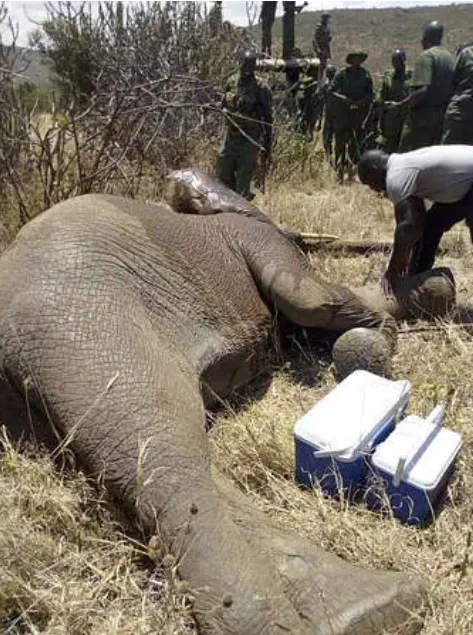
Her calf, still young and vulnerable, stayed close by her side, watching its mother with innocent eyes, seemingly unaware of the dangers that had befallen them. Despite the young elephant’s innocence, it was clear that it too was struggling. The calf’s front leg was swollen, and the discomfort was evident in the way it moved. The baby had an elbow that appeared dislocated, a condition that seemed unnatural and painful, yet there were no visible cuts or external wounds to explain the injury. The pair’s injuries remained a mystery, but the urgency to help them was immediately apparent. These animals, separated from their herd and in pain, could not survive long in their current condition.
Recognizing the dire need for immediate intervention, the conservation team mobilized with incredible precision and care. Approaching the elephants slowly through the thick brush, they needed to be as non-invasive and calm as possible, understanding that any sudden movements could frighten the animals and worsen their situation. The professionals knew that the key to a successful rescue lay in careful planning and respect for the elephants’ space.
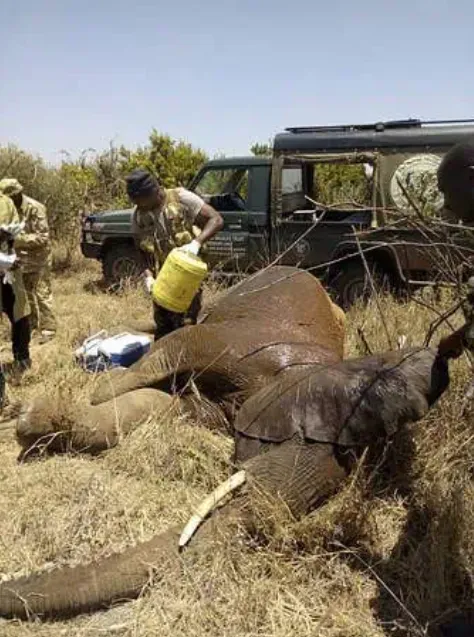
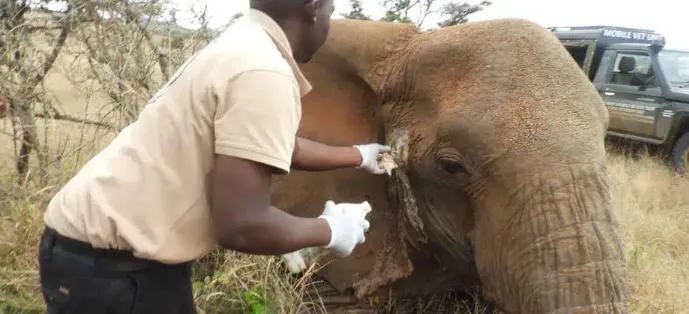
As they neared the pair, the decision was made to sedate the mother elephant to ensure she could receive the medical attention she so desperately needed. The rescue team had to act quickly but cautiously. Darting from a distance, they administered a 15mg dose of etorphine HCl, a powerful tranquilizer used to safely sedate large animals like elephants. The sedative worked swiftly, allowing the team to approach her more closely and begin their examination.
With the mother elephant sedated and stable, the conservationists assessed her condition. Her swollen leg was examined carefully, and it became clear that the injury was more severe than originally thought. The inflammation in her leg was the result of a past injury that had not healed properly, possibly due to her continued movement and the lack of immediate medical attention. The team understood that without proper intervention, the damage to her leg could worsen, leading to permanent disability or worse.
While the mother elephant received the necessary treatment, the team turned their attention to the calf. The young one had not moved far from its mother, staying close and showing no sign of fear towards the rescuers. The bond between them was unmistakable, a symbol of the deep connection elephants share. Despite its youthful innocence, the calf too was injured. The dislocated elbow appeared to be painful, and the swelling around the joint suggested that the injury had been present for some time, though the lack of external wounds left the team baffled.
With great care, the team examined the calf’s injury. The absence of visible trauma made it difficult to ascertain how the dislocation had occurred. No scratches or bites were found, but the calf’s injury was a clear sign that it had suffered as much as its mother. The conservationists debated how best to treat the calf’s dislocation, knowing that without proper care, its mobility could be compromised, affecting its ability to grow and survive in the wild.
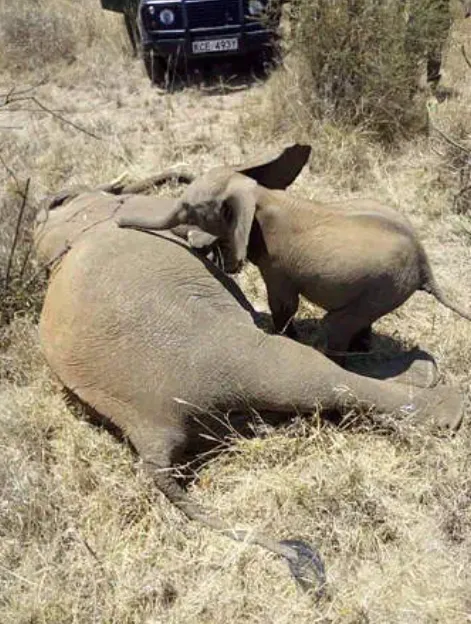
While the mother elephant received vital care and the calf was attended to, the rescue team’s focus remained on getting both animals back to a safe, stable condition. They worked quickly to ensure that both the calf and the mother could be safely transported to a nearby rehabilitation center, where more specialized care could be provided.
After a period of rest, the mother elephant began to wake from her sedation, her large eyes slowly fluttering open. She looked around, disoriented at first, but quickly calmed as she sensed the presence of her calf beside her. The bond between the two was undeniable, and the calf, despite its own discomfort, stayed by its mother’s side, offering silent comfort. The sight of the two elephants together, now safe, was a relief to everyone involved in the rescue. The team knew that their efforts, combined with the expertise of the veterinary staff at the rehabilitation center, would give the mother and her calf a real chance to heal.
In the weeks that followed, both the mother and calf began to show signs of improvement. The mother’s leg, though still swollen, started to heal under the care of the rehabilitation specialists, and her calf’s dislocated elbow was carefully treated, allowing the young one to regain some movement. Both elephants were closely monitored, their progress slow but steady. As the days passed, the bond between mother and calf remained unbroken, their healing journey a testament to the resilience of both animals.
The story of the mother and calf was not just one of medical intervention; it was a reminder of the incredible strength and bond shared between elephants. It was also a call to action for further protection of these majestic animals, who face threats not just from poaching but also from the challenges of injury and illness that often go unnoticed until it’s too late.
Thanks to the swift actions of the rescue team and the ongoing care they received, both elephants are on the path to recovery. Their journey serves as a poignant reminder of the importance of wildlife conservation and the role we all play in protecting these creatures from harm. The resilience of the mother elephant, despite the immense pain she endured, and the gentle care shown to her calf, are reminders of the strength that exists within these animals—and of our responsibility to ensure they are given the chance to thrive in their natural habitat.
As the mother and calf continue to heal, their story lives on as a testament to the dedication and love of conservationists who work tirelessly to protect wildlife, ensuring that such stories have happy endings, not just for the animals, but for the planet as a whole.