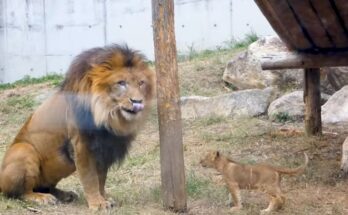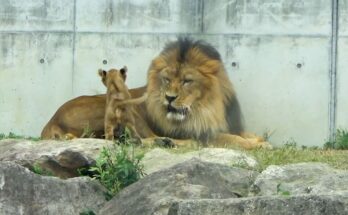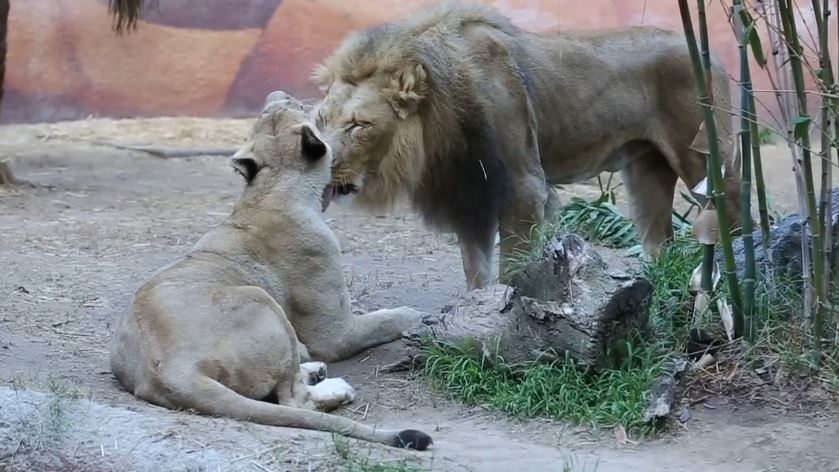
At the Los Angeles Zoo, visitors are often captivated not only by the majestic appearance of the lions but also by their tender displays of affection. While lions are widely known as powerful predators and symbols of strength, moments when they gently nuzzle, groom, and even appear to “kiss” one another reveal a softer, emotional side of these remarkable animals. Such interactions offer a rare and heartwarming glimpse into the social bonds that define life within a lion pride.
Lions are among the most social of all big cats, and physical affection plays an essential role in maintaining harmony within the group. At the LA Zoo, caretakers frequently observe lions rubbing faces, licking each other’s muzzles, and resting closely together. These behaviors help strengthen trust, reduce tension, and reinforce social hierarchies. What looks like kissing to human observers is often a form of mutual grooming, a natural behavior that promotes bonding and comfort.
These affectionate moments are especially meaningful in a zoo setting, where the lions live in carefully managed social groups designed to mimic their natural pride structures. By providing enriched habitats and attentive care, the LA Zoo allows lions to express their natural behaviors, including affection and playfulness. Visitors who witness these interactions often feel a deeper emotional connection to the animals, seeing them not just as fearsome predators but as sentient beings capable of warmth and companionship.
Beyond their charm, these displays of affection also serve an educational purpose. They remind us that wildlife is complex and emotionally rich, deserving of respect and protection. Observing lions showing affection at the LA Zoo encourages empathy and raises awareness about conservation efforts aimed at preserving lions and their habitats in the wild. In these quiet, touching moments, the kings of the savannah show that strength and tenderness can exist side by side.