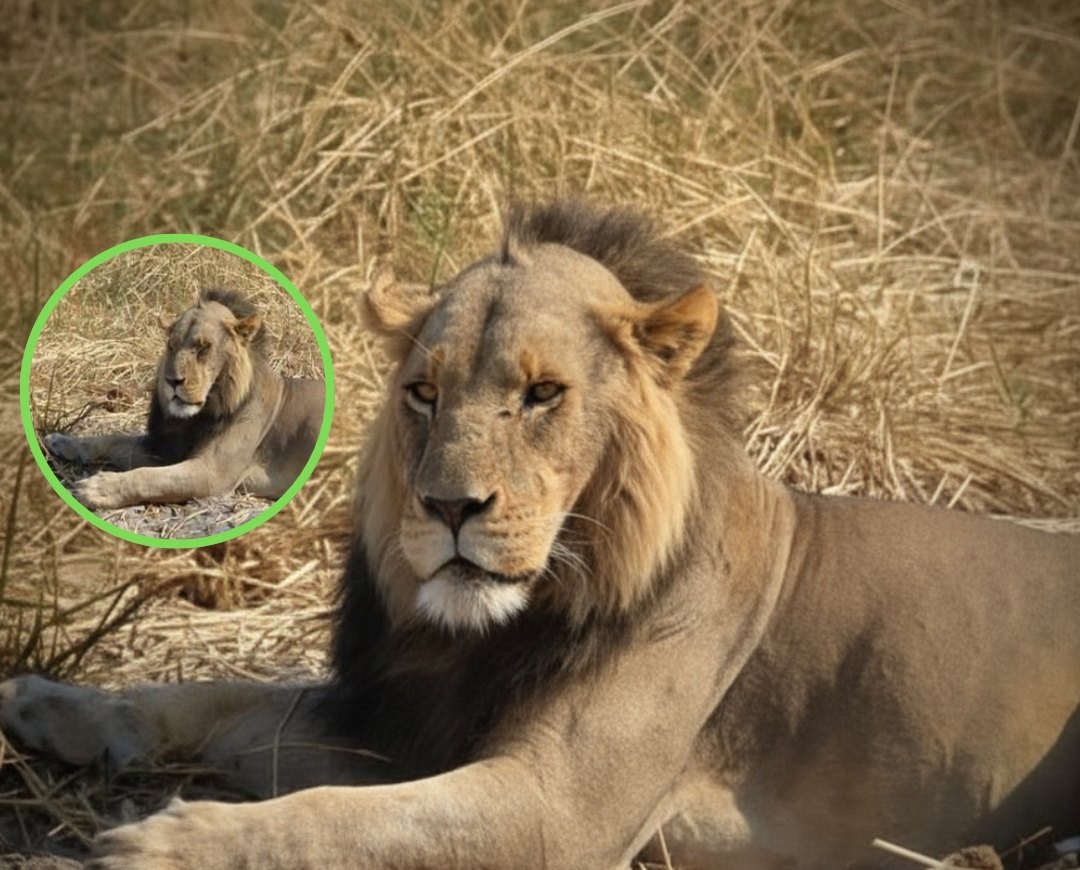
Not all kings wear perfect crowns—and that’s more than okay. In the wild, the image of a lion with a full, flowing mane often defines how we imagine strength and royalty. Yet nature rarely conforms to idealized pictures. Some lions develop manes that appear thinner or shaped like a receding hairline, influenced by age, genetics, climate, hormones, or even the challenges of their environment. This isn’t a flaw—it’s a natural variation in the story of survival.
A lion’s mane is not a measure of its worth or power. It does not determine courage, leadership, or the ability to protect a pride. Many lions with imperfect or sparse manes are seasoned survivors, shaped by years of experience, battles fought, and territories defended. Their appearance reflects life lived fully in the wild, not a lack of majesty.
In fact, these differences remind us that nature values function over flawlessness. Strength is proven through endurance. Beauty is revealed through resilience. Every scar earned, every strand lost, and every change over time tells a story of adaptation and perseverance. The wild is not a place for perfection—it is a place for those who endure.
When we look closer, we see that true royalty is not about looking untouched or ideal. It’s about standing firm despite hardship. It’s about leading, surviving, and thriving in an ever-changing world. Lions with imperfect manes embody this truth powerfully.
Their presence challenges our narrow definitions of beauty and invites us to appreciate character over appearance. In the end, the crown of a king is not defined by how perfect it looks, but by the strength of the one who wears it. And in nature, that strength is always worthy of respect. 👑💛