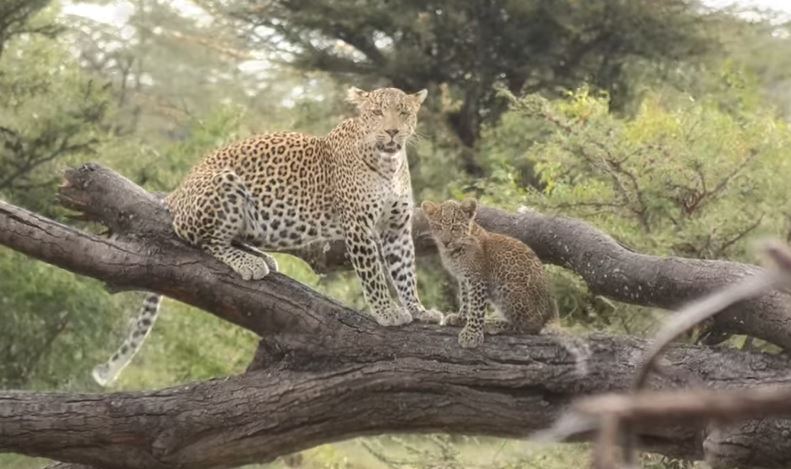
In the heart of Kenya’s Maasai Mara, few leopard families have captured the admiration of wildlife enthusiasts quite like Fig and her cub Furaha. Fig, one of the most studied and beloved leopards in the region, is known for her poise, intelligence, and remarkable success as a mother. When Furaha—whose name means “joy” in Swahili—was born, she quickly became a symbol of hope for the continuing lineage of this iconic leopard family. Observers often described Fig as fiercely protective yet endlessly patient, guiding Furaha through the challenges of early leopard life with an expert balance of caution and freedom.
From the dense riverine forests to the golden savannah plains, Fig taught Furaha the essential skills of survival: stalking silently through grass, climbing acacia trees with grace, and scanning the landscape with alert, amber eyes. Wildlife photographers frequently captured moments of tender bonding between the two—Furaha nuzzling beneath Fig’s chin, playful pounces on her mother’s tail, or the pair resting together on a high branch that offered both safety and a panoramic view of their territory. These intimate scenes revealed the softer side of a species often known only for its stealth and solitary nature.
As Furaha grew bolder, her adventures grew wider, yet Fig always remained close enough to ensure her safety. Their story became a testament not just to the beauty of leopards but to the depth of maternal connection and resilience in the wild. For many who witnessed their journey, Fig and Furaha represented the living soul of the Maasai Mara—a reminder of the fragile, irreplaceable lives that thrive when wilderness is protected.