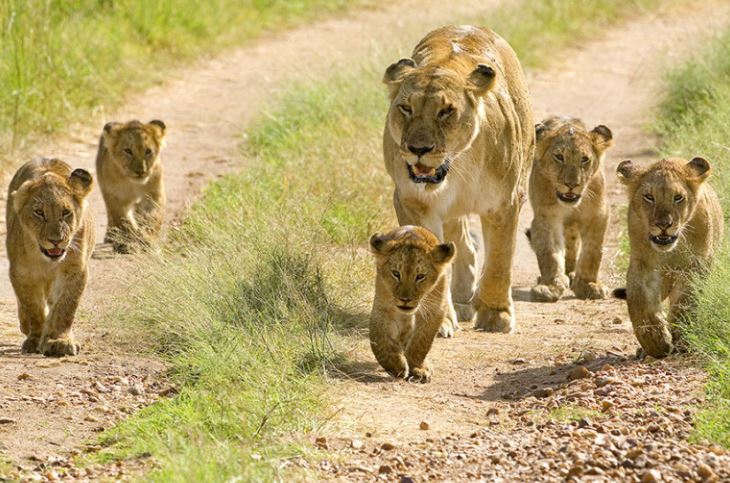
The latest wildlife sightings have revealed an extraordinary and heart-warming chapter in the life of a lion pride: three lioness sisters raising a total of ten cubs together. This kind of cooperative parenting, though natural for lions, is rarely observed at such a large scale, making it a truly remarkable event for guides, researchers, and wildlife enthusiasts.
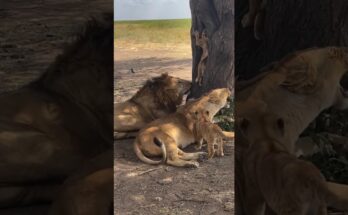
In lion prides, the females are almost always related—mothers, daughters, sisters, and cousins who remain together for life. Because of this strong bond, lionesses often synchronize their breeding cycles. When they give birth around the same time, their dens become communal nurseries where each cub benefits from the care of multiple mothers. The recent sighting perfectly showcases this behavior. The three lioness sisters share responsibilities fluidly: one may nurse the cubs while another stands guard, and the third goes off to hunt for the pride. This teamwork ensures that all ten cubs receive ample food, safety, and supervision.
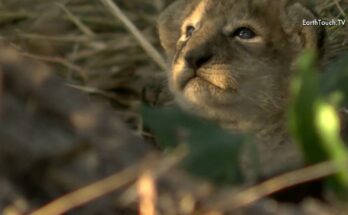
The cubs themselves bring vibrant life to the pride’s territory. Still only a few weeks old, they spend their days wrestling, tumbling, chewing grasses, and practicing tiny hunting pounces on their siblings. These playful moments are not just adorable—they are essential. Through play, the cubs strengthen their muscles, sharpen their instincts, and learn the social dynamics that will shape their future as adult lions.
The presence of multiple protective mothers also gives the cubs a significantly higher chance of survival. With threats such as hyenas, leopards, or rival male lions, cub mortality can be high, but a united group of lionesses is a formidable defense.
This latest sighting is a powerful reminder of the strength and beauty of lion family bonds. The ten cubs, thriving under the care of their devoted mothers, represent hope for the pride’s future and a rare, unforgettable moment in the wild.