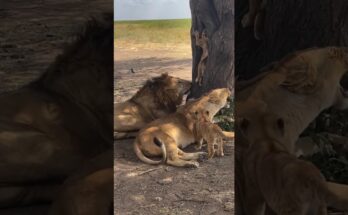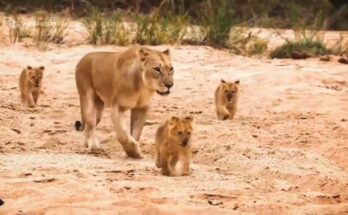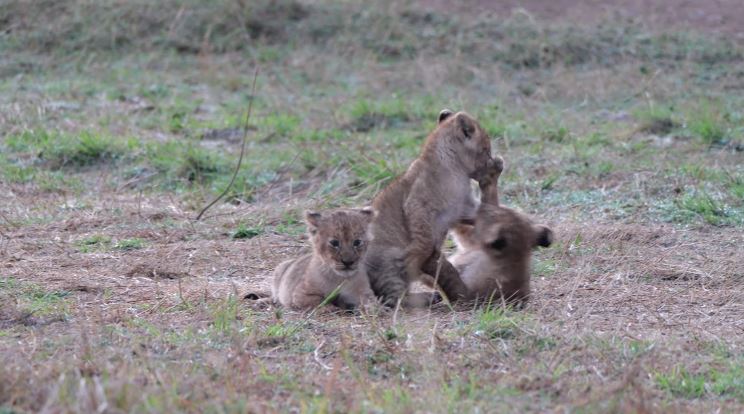
In the soft glow of an early Maasai Mara morning, a lioness stands watch over her three playful cubs, creating a scene that captures both the tenderness and the raw beauty of life in the wild. The golden sun rises slowly over the savannah, casting long shadows as the cubs tumble across the grass, their tiny paws swatting at each other in bursts of uncontainable energy. Their mother, patient and composed, keeps a careful gaze on them while remaining alert to the sounds of the waking plains.
Nearby lies the morning’s fresh kill—one that will nourish the little family and give the cubs the strength they need to grow. Between bouts of play, the youngsters scamper back to the carcass, taking small, eager bites before darting away again to chase a sibling or pounce on a swaying tuft of grass. Their movements are clumsy yet determined, each playful attack helping them practice the skills they will one day rely on as adults.
The mother lioness occasionally joins in the gentle chaos, brushing her head against a cub or nudging one closer to the kill, encouraging them to eat while also letting them explore the world around them. Her presence is both a shield and a guide, a blend of fierce protection and patient teaching that defines the early months of a lion’s life.
The scene embodies the rhythm of the Maasai Mara: the balance between nurturing and survival, between innocence and instinct. As the sun climbs higher and the cubs finally settle beside their mother, the bond among them is unmistakable. It is a snapshot of family, resilience, and the timeless cycle of life on the African plains—where every sunrise offers a new beginning, and every playful moment is part of a future written in strength and unity.