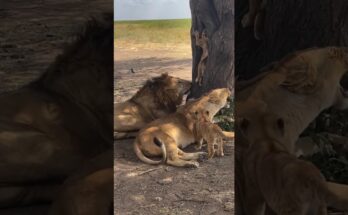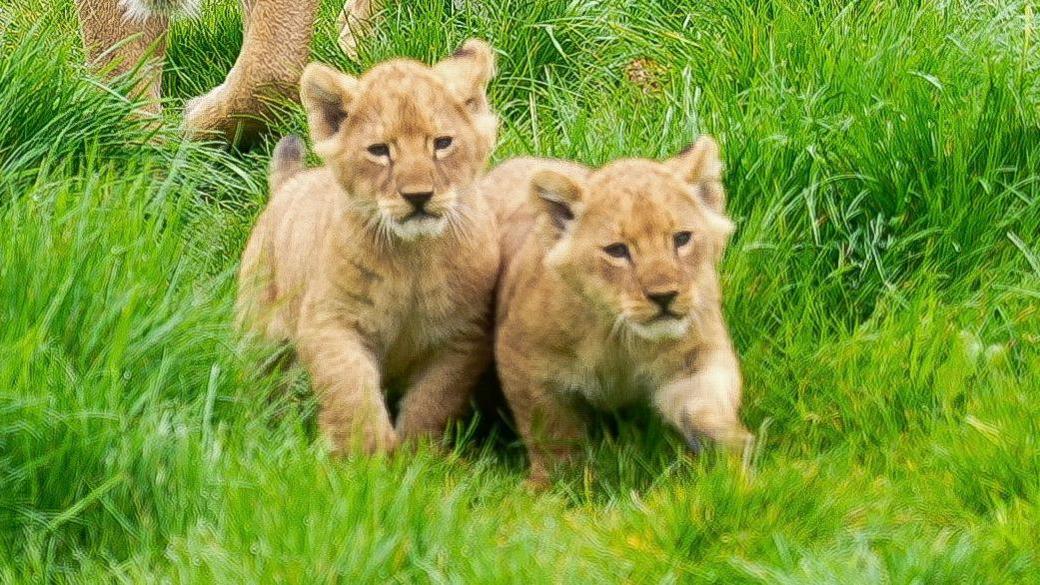
Deep in the mosaic of golden grasslands and sprawling woodlands of Hwange National Park, a soft, high-pitched sound breaks the morning stillness. From a shallow den cleverly hidden between thorny bushes, two tiny lion cubs emerge for the very first time. Barely a few weeks old, their eyes bright but still curious and unsure, they chirp in rapid little bursts—sounds more like birds than the mighty roars they will one day grow into.
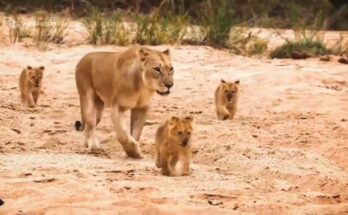
The den site, carefully chosen by their vigilant mother, lies in one of the park’s quieter regions, where elephant paths and shaded groves offer both protection and an abundance of life. The lioness steps out first, scanning the horizon for danger. Only when she is confident that the world outside is safe does she nudge her cubs forward with gentle nudges from her nose.
The cubs wobble into the open, their sandy coats dappled with faint rosettes that will fade with age. They chirp again—tiny, excited calls that echo faintly among the mopane trees. This vocalization helps them keep track of their mother, and it’s also one of the first ways they communicate with their pride.
With cautious enthusiasm, they explore a few steps beyond the den, pouncing clumsily on grass stems and batting at the shifting shadows. Each movement is part of the instinctive play that will shape them into capable hunters. Their mother remains close, eyes alert, tail flicking with a mixture of patience and pride.
For visitors and researchers lucky enough to witness such a moment, it is a breathtaking glimpse into the fragile beginnings of lion life. In Hwange’s vast wilderness, these two chirping cubs symbolize both the vulnerability and the enduring resilience of Africa’s most iconic predators.